Define your home gym goals and available space
A useful home gym begins with a clear purpose rather than a shopping list. A busy parent in Perth may need short strength sessions, quiet conditioning, or a flexible setup that can be packed away before family life takes over. The best plan is the one that fits the household and makes regular training easier.
Choose strength, cardio, or full-body priorities
Strength-focused training usually needs a way to load squats, hinges, presses, rows, and carries. Cardio can be built around a rope, outdoor walking, running, or simple intervals, while a full-body plan combines both without requiring a large collection of equipment. Choose the main priority first, then buy items that support it repeatedly.
For many beginners, full-body training offers the most useful starting point because one session can cover several movement patterns. A parent who has only 20 or 30 minutes may gain more from versatile weights and a clear routine than from a single specialised machine.
Measure your workout area before buying equipment
Measure the usable floor area, not just the empty corner where equipment might be stored. The person exercising needs room to lie down, step back, raise a weight overhead, and move safely around the equipment. Doorways, furniture, children’s play areas, and nearby walls also affect the practical space.
A tape measure and a simple floor plan can prevent an expensive mismatch. The measurements should include both the training footprint and the storage location, particularly if equipment must be cleared after every session.
Set a realistic budget for equipment and accessories
A home gym under 500 can be functional, but the full budget should include more than the main weight or machine. A mat, storage solution, skipping rope, collars, or small accessories can affect the final cost. Prices also vary by condition, delivery, and availability, so a modest reserve is sensible.
A phased approach often works better than spending the entire amount on one impressive item. The first purchase should support the most frequent training, while later additions should solve a demonstrated limitation rather than simply add variety.
Consider noise, flooring, storage, and ceiling height
Noise matters in flats, shared homes, and early-morning routines. Dropping weights, jumping on hard floors, or running a large machine can disturb other people and may damage flooring. A stable mat, controlled repetitions, and quieter movements make the setup more considerate.
Ceiling height is relevant for overhead presses, pull-up bars, and skipping. Storage should keep heavy items secure and prevent trip hazards, especially where children or pets share the room. A gym that can be reset quickly is more likely to remain useful.
Build a balanced equipment plan under $500
A balanced plan gives each purchase a job. The goal is not to recreate a commercial gym, but to cover enough movement patterns for progressive training in a compact space. A sensible sequence also leaves room for replacement costs and avoids buying equipment that rarely gets used.
Start with versatile equipment that supports multiple exercises
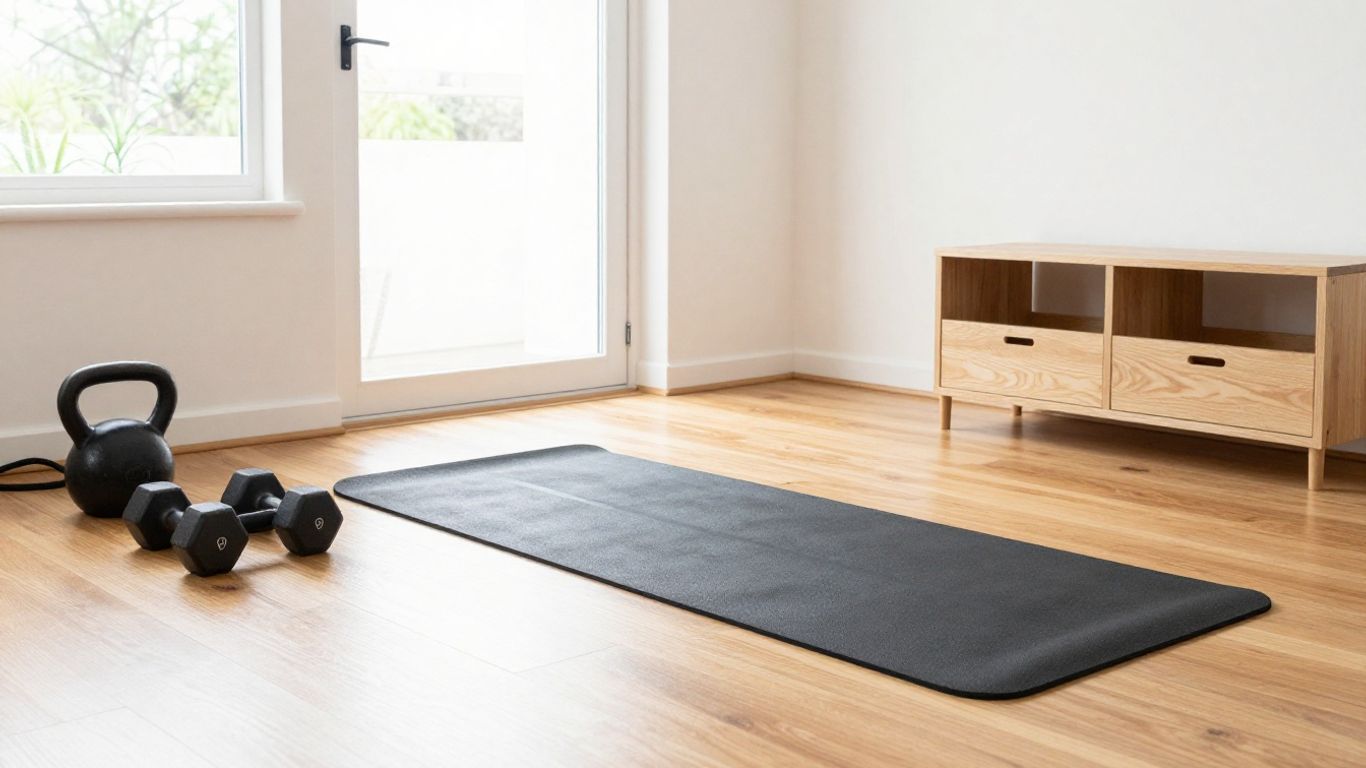
Adjustable dumbbells, a kettlebell, resistance bands, and a mat can cover a wide range of beginner exercises. They can be used for presses, rows, squats, hinges, carries, core work, and warm-ups without taking over a room. The strongest anchor item depends on the person’s priority and available storage.
A versatile item earns its place by appearing in several weekly sessions. If a piece supports only one movement and that movement is not central to the plan, it may be better left for a later phase.
Decide which items to buy new or used
New equipment can make sense for items where fit, locking mechanisms, hygiene, or warranty support matter. Used solid weights, basic benches, and simple racks may offer better value when they are inspected carefully. The buyer should still account for transport and the time required to verify condition.
A low price does not automatically make used equipment worthwhile. A damaged adjustment system, missing pin, unstable base, or unusual size can turn a bargain into a costly replacement.
Reserve part of the budget for essential accessories
Small accessories often determine whether the main equipment is comfortable and safe to use. A practical starter budget may allow for a mat, storage hooks or a stand, a skipping rope, and any required collars or replacement parts.
The most useful accessories tend to be simple and durable:
- A non-slip exercise mat for floor-based work.
- A skipping rope for compact conditioning sessions.
- Storage hooks, a small rack, or a secure container.
- A timer or notebook for tracking sessions.
These items do not need to be elaborate. They reduce friction, protect the floor, and help the user start a session without searching for loose equipment.
Avoid equipment that duplicates the same training function
Budget setups become crowded when several purchases do almost the same job. Two kinds of light weights may provide less value than one adjustable option, while multiple cardio gadgets may all be neglected if outdoor walking already suits the user.
Before buying, the shopper can ask which movement or training problem the item solves. If the answer is unclear, the money may be better held for equipment that expands the routine in a meaningful way.
Choose the best strength-training equipment
Strength equipment should match current ability, training space, and the expected path of progression. There is no single best option for every household. A compact tool that is easy to adjust and store may be more useful than a heavier piece that rarely comes out.
Compare adjustable dumbbells, kettlebells, and resistance bands
Adjustable dumbbells provide a familiar way to train each side independently and can suit presses, rows, lunges, and squats. Kettlebells are useful for carries, deadlift patterns, goblet squats, and swings when the user has learned appropriate technique. Resistance bands are light, inexpensive, and helpful for warm-ups, assistance work, and travel.
The choice depends on how much load is needed and how quickly the user expects to progress. Bands are easy to store but may feel different through a movement, while adjustable weights can offer clearer increments but need more careful handling.
Decide whether a bench is worth the budget
A bench can make pressing, supported rows, step-ups, and seated movements more comfortable. It also takes up floor space and should not be treated as essential if the budget is tight. Many beginners can train effectively from the floor or standing while saving for a stable bench later.
If a bench is purchased, stability matters more than extra features. It should suit the user’s height, fit the available area, and have a weight limit that covers the person and the load being used.
Add a pull-up bar for upper-body training
A pull-up bar can provide a compact option for vertical pulling, hanging work, and assisted progressions. However, the door frame or mounting surface must be suitable, and the bar must be installed according to its instructions. A secure anchor is more important than a low price.
People who cannot yet perform a full pull-up can begin with controlled hangs, foot-assisted repetitions, or band assistance where appropriate. The bar should complement rows and other pulling exercises rather than become the only upper-body tool.
Select weights that match your current ability and progression goals
The correct starting load allows controlled repetitions with consistent technique. It should be challenging enough to create a training effect without forcing shortened ranges, momentum, or poor positioning. A beginner generally benefits from having a few manageable increments rather than one very heavy option.
Progress can come from adding repetitions, improving control, increasing range, reducing rest, or moving to a slightly heavier load. This gives the user several ways to advance before buying more equipment.
Add affordable cardio and conditioning tools
Cardio does not require a large machine or a dedicated room. The most useful choice is usually the one that the person enjoys enough to repeat and can perform without disrupting the household. Short sessions can be planned around work, school runs, and family routines.
Use a jump rope for inexpensive high-intensity workouts
A jump rope takes little storage space and can raise the heart rate quickly. Beginners can start with short bouts separated by rest, or practise marching and low-impact rope movements before attempting continuous skips. The surface should be even, clear, and suitable for repeated foot contact.
Rope work is not ideal for every person or every floor. Quiet alternatives such as step-ups, brisk marching, or shadow boxing can provide conditioning when jumping would be uncomfortable or too noisy.
Compare rowing machines, exercise bikes, and compact steppers
Rowing machines, bikes, and steppers can provide indoor conditioning, but each has different space, noise, and storage demands. A machine should be considered only after checking its dimensions, maintenance needs, and likely frequency of use.
Second-hand cardio equipment can be tempting, although the buyer should test the resistance, pedals, seat, display, and moving parts. A machine that is difficult to move or store may become an expensive clothes rack despite its training potential.
Consider walking, running, and bodyweight cardio alternatives
Outdoor walking and running can supply regular aerobic work without taking money from the equipment budget. Bodyweight circuits can also combine squats, step-backs, marching, mountain climbers, and controlled upper-body movements in a small area.
For busy parents, a brisk walk during a child’s activity or a short circuit while another family member is occupied may be easier to repeat than a long indoor workout. Consistency matters more than owning a particular machine.
Choose conditioning equipment based on space and workout preferences
A compact tool is useful only if it suits the user’s preferences and surroundings. Someone who dislikes jumping may prefer walking or a bike, while someone who enjoys brief intervals may get more value from a rope and a timer.
The decision should account for noise, floor protection, storage, and access to outdoor space. A simple option that is ready in seconds often has a practical advantage over a larger machine with a more ambitious specification.
Create effective workouts with a limited setup
Good programming makes a small equipment collection feel far more capable. A strength coach can organise sessions around movement patterns, manageable effort, and gradual progression rather than a long list of isolated exercises. This keeps training clear when time is limited.
Build full-body routines for beginners
A beginner routine can include one squat pattern, one hinge, one push, one pull, and a short carry or core exercise. Two or three rounds may be enough at first, with rest adjusted so technique remains steady. The session should finish before fatigue causes rushed repetitions.
The routine can be performed with dumbbells, a kettlebell, bands, or bodyweight movements. The equipment matters less than selecting exercises the person can perform consistently and safely in the available space.
Combine pushing, pulling, squatting, and hinging movements
Balanced sessions train the major movement patterns without requiring a different machine for each muscle. Presses and push-ups cover pushing, rows and pull-up progressions cover pulling, squats and split squats train knee-dominant work, and deadlift variations train hinging.
A simple sequence helps the user organise a session without overthinking it:
- Begin with a brief warm-up and a movement rehearsal.
- Perform a squat or split-squat variation.
- Pair a push with a pull, using controlled repetitions.
- Finish with a hinge, carry, or short conditioning block.
This structure can be shortened on busy days without losing the main training purpose. It also makes it easier to identify which pattern needs attention when a session feels incomplete.
Use progressive overload without adding more equipment
Progressive overload can be created through more repetitions, extra sets, slower lowering phases, longer pauses, improved range, or shorter rests. These changes should be introduced gradually, with technique kept consistent. More equipment is only one possible form of progression.
A training log helps reveal whether the person is actually advancing. Recording the exercise, load, repetitions, and perceived difficulty provides a clearer basis for change than guessing from session to session.
Plan weekly strength and cardio sessions
A practical week might include two or three full-body strength sessions alongside walking or brief conditioning on other days. The exact arrangement should reflect work, sleep, family commitments, and recovery rather than an idealised timetable.
Short sessions still count when they are planned and repeated. A parent may use a longer weekend session for strength and fit two brief weekday sessions around household responsibilities, adjusting the plan when life becomes unusually demanding.
Shop safely and avoid common buying mistakes
A low budget makes careful shopping even more valuable. Product photographs and promotional wording cannot confirm whether equipment will fit, remain stable, or last through regular use. The buyer should inspect practical details before considering appearance or extra features.
Check weight limits, dimensions, and warranty coverage
Weight limits should include the user and any load placed on a bench, bar, rack, or machine. Dimensions should be checked when the equipment is assembled, not only when folded or packaged. Warranty terms may also differ between the frame, moving parts, and accessories.
The buyer should keep the instructions and receipt where possible. Clear records can help when a part is missing or a fault appears, although warranty coverage depends on the seller’s terms.
Evaluate used equipment for wear and missing parts
Used equipment should be checked for rust, cracks, bent sections, frayed cables, loose bolts, and damaged padding. Adjustable items need particular attention because pins, collars, locks, and hinges must work reliably. Missing small parts can prevent safe use.
If possible, the buyer should test the item before paying. For heavy equipment, transport should also be planned so that lifting it does not create a separate hazard.
Avoid misleading low-price deals and unnecessary features
A very low advertised price may exclude delivery, required attachments, or a key component. Some products also add screens, programmes, or adjustment systems that do not support the buyer’s actual routine. The total cost and likely use are more relevant than the headline price.
A short comparison of specifications, dimensions, return terms, and user needs can prevent an impulsive purchase. The simplest suitable item is often easier to maintain and use.
Confirm that equipment is safe for your floor and living space
Hard floors, carpet, balconies, and garage surfaces each present different stability and noise concerns. Equipment should sit level, remain clear of walkways, and be used with enough space for the intended movement. Jumping, swinging, and overhead work need extra attention to surroundings.
The setup should also be stored where children cannot pull heavy items down or climb on unstable equipment. Household safety is part of the gym plan, not an afterthought.
Maintain and upgrade your home gym over time
A small gym becomes more valuable when its equipment stays in good condition and the setup evolves slowly. Maintenance protects the original budget, while tracking use prevents upgrades from becoming clutter. The right question is whether a purchase improves training in a clear, repeated way.
Store equipment to protect it and save space
Weights should be placed where they cannot roll into walkways, and bands should be kept away from sharp edges, heat, and prolonged sunlight. A wall hook, compact rack, or sturdy container can keep the floor clear without requiring a dedicated room.
Storage should allow equipment to be reached quickly. If putting everything away takes too long, the gym may become harder to use during short breaks in the day.
Clean and inspect gear regularly
Mats, handles, benches, and high-touch surfaces should be cleaned according to the material and the maker’s instructions. Bolts, adjustment pins, rope handles, and band surfaces deserve occasional inspection. Damaged equipment should be removed from use until it can be repaired or replaced.
A brief check every few weeks is usually easier than waiting for a visible failure. It also keeps the training area more pleasant for everyone sharing the home.
Track performance before purchasing upgrades
Before buying a heavier load or another machine, the user should review several weeks of training. The record may show that progress is limited by time, technique, recovery, or programming rather than equipment. It may also reveal which item is used often enough to justify an upgrade.
Useful signs include repeated completion of the current load, a consistent need for more resistance, or a movement that cannot be trained well with the present setup. Purchases made from those observations are less likely to gather dust.
Expand the setup according to your training goals
The next addition should address a specific gap, such as heavier loading, better pulling options, or quieter conditioning. It should fit the available space and remain compatible with the current equipment. A phased setup can grow without losing its original simplicity.
A home gym under 500 does not need to stay fixed forever, but each upgrade should earn its place. The best long-term arrangement is compact, safe, and aligned with the person’s changing goals.
Conclusion
A well-planned home gym under 500 can support effective strength and conditioning without filling the house with equipment. By measuring the space, prioritising versatile tools, reserving money for accessories, and progressing through training rather than constant shopping, a busy parent can build a practical routine that fits real life.
Frequently Asked Questions
Can a home gym under 500 support full-body training?
Yes. Adjustable weights, bands, a mat, and bodyweight movements can cover pushing, pulling, squatting, hinging, carrying, and core work when the routine is organised well.
What should be bought first for a small home gym?
The first purchase should match the main goal and support several exercises. For many beginners, a versatile resistance tool and a suitable floor surface provide a useful starting point.
Is an exercise bench essential?
No. A bench can expand exercise options, but many movements can be performed standing or from the floor. Stability, dimensions, and likely use should determine whether it deserves the budget.
Are used weights worth considering?
Used weights and basic equipment can offer value when they are inspected for cracks, rust, damaged adjustment parts, and missing components. The buyer should also consider transport and safe storage.
How can someone exercise quietly at home?
Controlled repetitions, floor-based strength work, walking, marching, and low-impact circuits are generally quieter than dropping weights or repeated jumping. A suitable mat can also reduce noise and protect the floor.
How many days per week should a beginner train?
A beginner can start with two or three manageable strength sessions each week and add walking or brief conditioning as time allows. The schedule should leave room for recovery and normal family commitments.
When is it time to upgrade home gym equipment?
An upgrade makes sense when the current equipment is used consistently and creates a clear training limitation. Tracking loads, repetitions, exercise quality, and session frequency can help confirm that need.