Set your training goals and budget
A useful home gym starts with the sessions a person can realistically fit into the week, not a long shopping list. For busy parents, a few reliable pieces that suit the available time and space can be more practical than equipment chosen for an ideal routine. A clear budget helps keep the setup focused while leaving room for the costs that come with buying and using it.
Choose the types of workouts you want to do
The right equipment depends on whether workouts will centre on strength, mobility, bodyweight training, or a mix. Someone who plans short strength sessions may want adjustable resistance, while a person who prefers floor-based movement might start with a mat and a few compact tools. It helps to picture a typical week and choose equipment for sessions that are likely to happen, rather than for every workout style imaginable.
Decide which exercises matter most
A short list of familiar movements can clarify what the setup needs to support. Consider which exercises feel manageable at home and whether they need a stable surface, free floor space, or added resistance. A useful first purchase is one that supports several planned exercises, not merely the one that looks most appealing on a shelf.
Reserve part of your budget for essentials
The equipment price is only one part of setting up a training space. A small allowance for a suitable floor covering, storage, or replacement parts can prevent the budget from being spent entirely on weights. The amount to set aside will depend on what the room already has, so a quick inventory is a sensible first step.
Account for delivery, taxes, and price changes
Prices can vary by seller, location, and delivery method, and the checkout total may differ from the advertised price. Before choosing a bundle, check whether delivery and taxes are included and whether the listed price applies to the required size or weight. A home gym under 500 is easier to plan when the target is the final cost, not just the price shown beside each item.
Measure and prepare your workout space
A compact setup can still need more room than expected once a person is moving through a full range of motion. Measuring the workout area before ordering helps avoid equipment that blocks doors, walkways, or shared family space. The room should also suit the household’s usual routines, so equipment can be used and put away without turning the area into a permanent obstacle.
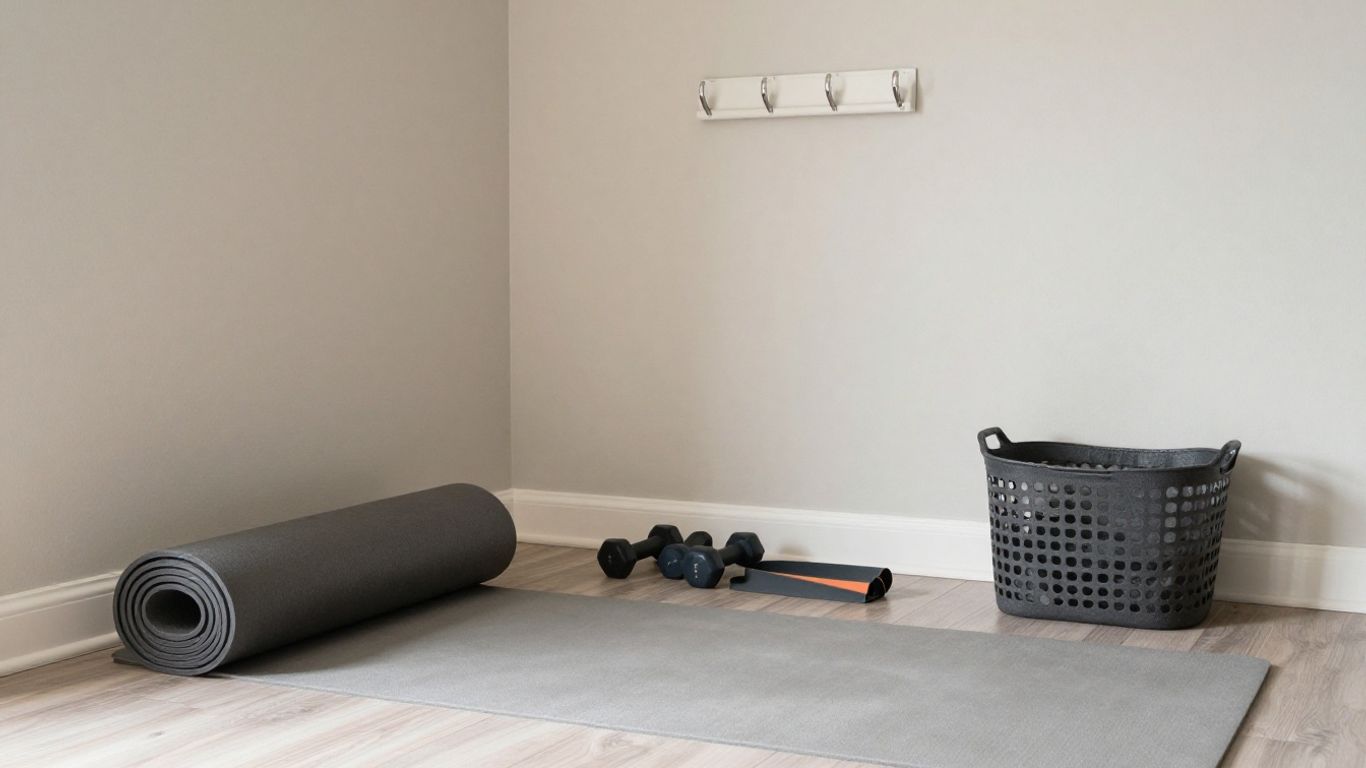
Check floor space and ceiling height
Measure the clear floor area, including room to step, bend, lunge, and reach without striking furniture. Ceiling height matters for overhead movements and for equipment that needs to be lifted into position. It is worth marking out the intended footprint with tape before buying, then testing a few planned movements inside that boundary.
Consider flooring, noise, and ventilation
A hard, even surface can make equipment more stable, while a suitable mat or floor covering may reduce scuffs and help create a defined training area. In a shared home, consider whether dropping or setting down weights could disturb others, and avoid movements that are likely to create unnecessary noise. Good airflow also helps make short sessions more comfortable, particularly in a warm or enclosed room.
Plan how to store equipment between workouts
Storage should be part of the layout, not an afterthought. Equipment left in a walkway can become a trip hazard and may be harder to use consistently. A simple storage plan could include:
- A basket or wall hook for bands and small accessories.
- A clear, stable spot for weights when they are not in use.
- A folded mat stored away from damp areas.
- A designated corner that keeps doors and family pathways clear.
Keeping frequently used items easy to reach makes it more likely that the area will be ready for a short workout. Storage does not need to be elaborate; it simply needs to keep equipment secure and the shared space usable.
Prioritize versatile, affordable equipment
With a limited budget, each item should have a clear role in the routine. Versatile equipment can support more than one movement, but compactness and price are not enough if an item does not suit the person using it. Comparing the options by purpose helps separate a practical starter purchase from accessories that can wait.
Compare adjustable dumbbells with fixed-weight options
Adjustable dumbbells can provide several resistance choices in a single set, which can save storage space, though the mechanism and total weight range should suit the intended exercises. Fixed-weight dumbbells are straightforward to pick up and use, but building a range can take more room and cost more over time. The better option depends on the exercises, available storage, and whether changing resistance during a session is convenient.
| Option | Potential advantage | Check before buying |
|---|---|---|
| Adjustable dumbbells | Several resistance settings in one compact set | Locking mechanism, adjustment process, and total weight |
| Fixed-weight dumbbells | Simple to select and use | Space needed for the chosen range |
| Resistance bands | Lightweight and easy to store | Resistance level, condition, and anchor method |
| Kettlebell | One tool for a range of strength movements | Weight suitability and a secure grip |
The table is a starting point rather than a ranking: a tool only earns its place if it matches the planned routine. For someone training in a shared or small room, storage and ease of setup may matter as much as the number of available resistance options.
Evaluate resistance bands for strength and mobility work
Bands can provide resistance for a range of movements and take up little storage space. Their feel differs from free weights, and the available resistance depends on the band and how it is used, so the product details should be checked carefully. A band should be inspected for damage before use, especially if it will be stretched or attached to an anchor point.
Consider a bench, kettlebell, or suspension trainer
A bench may support seated or lying exercises, but it also takes up floor space and should be stable for its intended use. A kettlebell can add a different grip and loading option, while a suspension trainer depends on a suitable, secure anchor point. Rather than buying all three, a person can choose the one that fills a genuine gap in the exercises they already plan to do.
Add a mat and small accessories only if they serve a purpose
A mat can provide a defined area for floor exercises and may make the surface more comfortable. Other small items can be useful when they solve a specific problem, but they should not displace core equipment simply because they are inexpensive. Before adding an accessory, identify the movement it will support and where it will be stored.
Build a balanced equipment setup
A balanced home gym does not need to imitate a commercial facility. It needs enough options to make a simple routine workable and enough flexibility to adjust the challenge as skills develop. Starting from movement needs, then matching tools to those needs, usually keeps the setup more useful than buying a collection of unrelated items.
Match equipment to your training goals
For strength-focused sessions, the priority may be resistance that can be adjusted to suit different exercises. A mobility or bodyweight routine may need very little equipment beyond a clear floor area and a mat. If household members have different preferences, the setup should reflect the person or people who will use it most often rather than trying to cover every possible training style.
Combine tools to cover major movement patterns
A small setup can support a variety of movements when the equipment is chosen with some overlap in mind. A planned routine might include squatting, hinging, pushing, pulling, carrying, and floor-based work, using body weight or suitable resistance where appropriate. A simple checklist can help test whether the proposed purchases fit together:
- Choose one option for lower-body movements, such as a squat or hinge.
- Include a way to perform pushing and pulling exercises.
- Leave clear space for bodyweight and floor-based movements.
- Add a carry or grip challenge only if it fits the routine and room.
This is a planning aid, not a requirement to buy a separate tool for every pattern. One versatile item may cover several movements, while a clear patch of floor can be just as important as another piece of equipment.
Choose a starter setup for strength training
A basic strength setup could centre on a pair of adjustable dumbbells or a modest selection of fixed weights, depending on budget and storage. A band can add another resistance option, and a mat may be worthwhile if floor exercises are part of the plan. The exact combination should be guided by the movements the person expects to practise and the safe working limits of each item.
Choose a compact setup for limited space
In a small home, foldable or easy-to-store pieces may be more useful than equipment that remains set up all week. A pair of compact resistance tools, a mat, and bodyweight exercises can cover a simple routine without occupying a permanent corner. A clear path for setup and pack-away is part of the design, especially where the area also serves as a bedroom or family room.
Shop strategically to stay under $500
Shopping carefully can stretch a fixed budget without turning the process into a hunt for the lowest price at any cost. Comparing the full product details, condition, and return terms helps avoid purchases that do not fit the room or routine. A staged approach can also make a useful starting point possible without buying every desired item at once.
Compare new, used, and refurbished equipment
New equipment may come with clearer condition information, while used or refurbished items can offer a lower purchase price. For second-hand equipment, check for wear, cracks, loose parts, missing components, and signs that it has been stored poorly. The saving is worthwhile only if the item is sound, suitable, and practical to transport and store.
Check weight limits, dimensions, and return policies
Product dimensions should be compared with the measured space, including room for movement around the item. Check stated weight limits and any use restrictions, then read the return policy before purchase, particularly for bulky equipment. If details are unclear, it is safer to pause and seek clarification than to assume that a product will suit the intended use.
Avoid paying for features you will not use
Extra settings and add-ons can look attractive, but they do not make a setup better if they are unlikely to be used. Compare the functions that support the planned routine, and treat additional features as optional rather than necessary. That keeps the budget focused on reliability, fit, and equipment that can be used regularly.
Buy in stages when a complete setup exceeds your budget
A phased purchase can help a person start with the essentials and learn what the routine actually needs. First, choose equipment that supports the most frequent sessions; then consider an addition once a clear gap appears. This approach can reduce clutter and make each later purchase easier to evaluate against real use.
Use your home gym safely and effectively
A home setup works best when the equipment is in sound condition and the routine is manageable. Safety also depends on the person’s technique, the space around them, and whether the resistance suits the movement. A little preparation before a session can help make a short workout calmer and more consistent.
Inspect equipment before each workout
Before exercising, check that weights, adjustment mechanisms, bands, and any anchors appear secure and undamaged. Keep the training area free of loose objects and make sure equipment is placed on a stable surface. If an item looks worn, unstable, or difficult to secure, it should not be used until the concern is resolved.
Learn proper form before increasing resistance
It is sensible to practise movements with manageable resistance and focus on controlled, comfortable technique. Resistance should not be increased simply because a heavier option is available; the movement should remain steady and within the person’s current ability. When technique is uncertain, a qualified coach can help with exercise instruction.
Create a simple weekly training plan
A simple plan is often easier to follow around work, family routines, and changing schedules than a complicated programme. It can identify the days available, the movements to practise, and a realistic session length. A person might begin by planning:
- Which days or time windows are most likely to work.
- Which movement patterns each session will include.
- What equipment needs to be ready before starting.
- How to adjust the plan when a session is missed.
A plan should be flexible enough to fit real life rather than creating pressure to complete a perfect week. Short, repeatable sessions can make the equipment more useful than an ambitious routine that rarely fits the household’s schedule.
Maintain and store equipment to extend its life
Follow the manufacturer’s care and storage instructions, and keep equipment dry and away from conditions that may cause damage. Return weights and accessories to their designated places after use, and check moving or adjustable parts periodically. Regular care helps keep the training area organised and makes it easier to notice when something needs attention.
Conclusion
A home gym under $500 can be practical when it begins with clear training goals, a measured space, and a short list of equipment that earns its place. By checking product details, accounting for the full cost, and adding pieces gradually, a household can create a compact setup that suits its routine without filling the room with unused gear.
Frequently Asked Questions
What equipment is most useful for a home gym under $500?
The most useful equipment depends on the person’s training goals and available space. Adjustable or fixed-weight dumbbells, resistance bands, and a mat are common options, but each purchase should support planned exercises.
Can a small room work as a home gym?
Yes. A small room or shared space can work if there is enough clear floor area for the planned movements and a safe way to store equipment between sessions.
Are adjustable dumbbells worth considering?
They may suit people who want several resistance choices in a compact footprint. Before buying, check the adjustment process, total weight range, and whether the set fits the exercises planned.
Are resistance bands enough for strength training?
Bands can provide resistance for many movements, but whether they suit a particular routine depends on the exercises and the available resistance levels. They can also be combined with bodyweight movements or other equipment.
Should a bench be part of a starter setup?
A bench is useful only if it supports exercises the person intends to do and there is room to use and store it. Its stability, dimensions, and stated limits should be checked before purchase.
Is second-hand gym equipment a good option?
Used equipment may cost less, but its condition should be checked carefully. Look for damage, worn parts, missing components, and any safety details that cannot be confirmed before buying.
How can a home workout routine fit a busy family schedule?
Planning a few realistic time windows and keeping frequently used equipment easy to access can make sessions simpler to start. A flexible plan is more practical than one that depends on every day going exactly as expected.